5 products

Questions about Repair Assortment Kits

Are nylon fuel lines safe for ethanol blends?

Yes, with the right grade. Standard nylon tubing is compatible with gasoline and E10. For E15, E85 or higher ethanol content, use tubing and O-rings rated for high-ethanol fuel. Viton O-rings in quality fittings are rated for ethanol exposure.

Are steel fuel line repair kits safe for fuel-injected vehicles?

Yes. Steel lines with compression or flared fittings are standard OEM practice on fuel-injected vehicles. Kits with RoHS yellow zinc coating add corrosion resistance without affecting pressure integrity.

Can I repair a fuel line without replacing the whole line?

Yes. Splice joiners, quick-connect fittings, and repair line sections allow you to replace only the damaged segment. You do not need to replace the entire fuel line run in most cases.

Can I use a 5/16” fuel line repair kit on a fuel-injected vehicle?

Yes, if the original fuel line is 5/16" in diameter. Verify your OEM specification before purchasing. High-pressure EFI primary feed lines are more commonly 3/8".

Can rubber splice joiners be used on high-pressure fuel lines?

No. Rubber splice joiners are rated for low-pressure return and vacuum applications only. High-pressure feed lines require nylon or steel fittings rated for 40-80 PSI injection pressures.

How long does a fuel line repair last?

A properly installed fuel line repair using rated components should last the remaining service life of the vehicle. Premature failure is almost always caused by incorrect sizing, incompatible materials, or skipping the post-repair pressure check.

How often should fuel lines be inspected on older vehicles?

Vehicles over ten years old should have accessible fuel lines inspected at every oil change. Look for surface rust, cracking at bends, discoloration, and any fuel weeping at connection points.

What are Viton O-rings and why do they matter?

Viton is a fluoroelastomer compound resistant to petroleum fuels, ethanol blends, and high heat. It outperforms standard nitrile rubber O-rings in fuel system applications and should be used when rebuilding any fuel fitting connection.

What is a 5/16” fuel line repair kit used for?

A 5/16 inch fuel line repair kit is used to replace or splice damaged sections of 5/16" diameter fuel lines, the standard size found on most carbureted engines and low-pressure EFI return lines.

What is a quick disconnect fuel line fitting?

A quick disconnect - also called a push-lock or push-to-connect fitting - is a factory-style connector that locks onto a barbed or tube end without tools. It is the most common fuel line connection type on domestic vehicles built after 1990.

What is included in a fuel line repair kit?

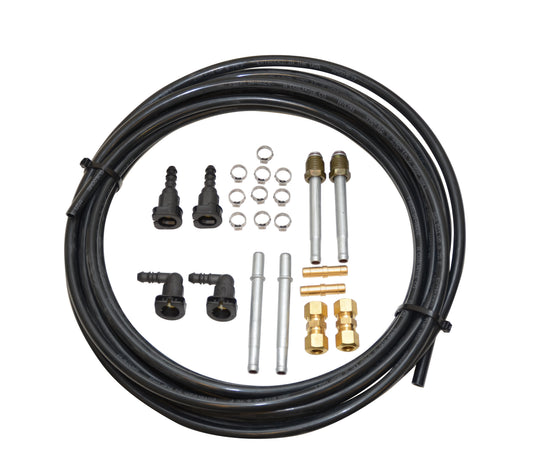
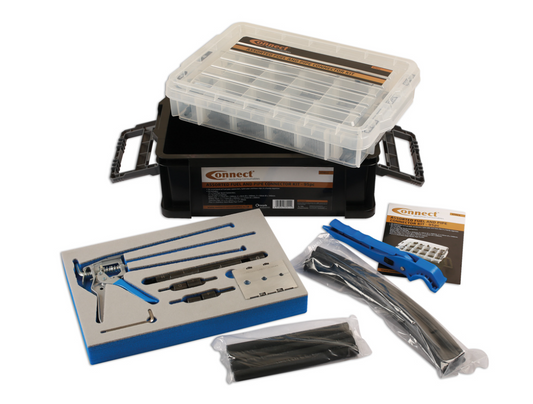
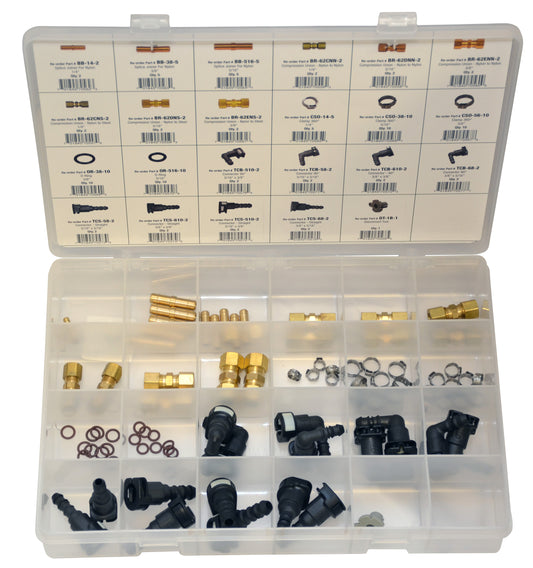
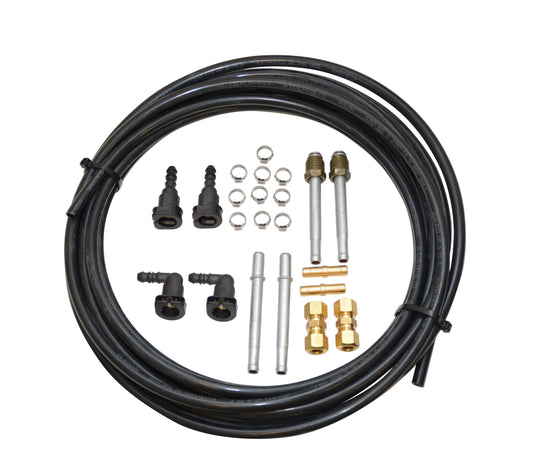
A complete kit includes a coil of replacement nylon fuel line, commonly 25 feet, in 5/16" or 3/8", plus straight and 90-degree quick disconnect fittings, nylon-to-steel adapters, splice joiners, compression clamps and O-rings. That covers a full repair without extra parts, and costs less than buying the components individually for shops that handle regular fuel system work.

Do I need a 5/16" or 3/8" fuel line repair kit?

Measure the outside diameter of the existing line with a caliper before ordering. A 5/16" line measures about 0.3125 inches and is common on compact cars, older domestic vehicles, carbureted engines, return lines and secondary circuits. A 3/8" line is common on domestic trucks and SUVs and on high-pressure EFI feed lines. Pick the kit that matches the measured line so the fittings seal.

Collection: Repair Assortment Kits

Wholesale fuel line repair assortment kits for automotive service shops. Pre-sorted kits covering the most common repairs.

Repair Assortment Kits